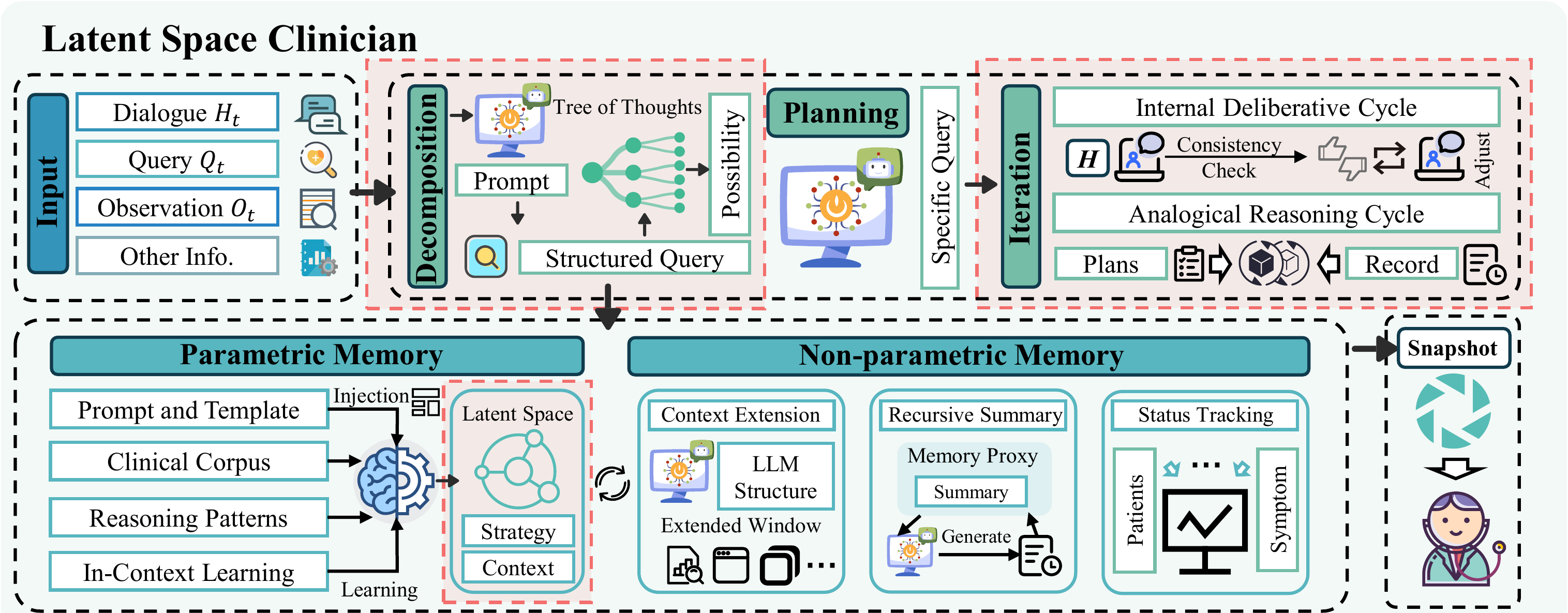
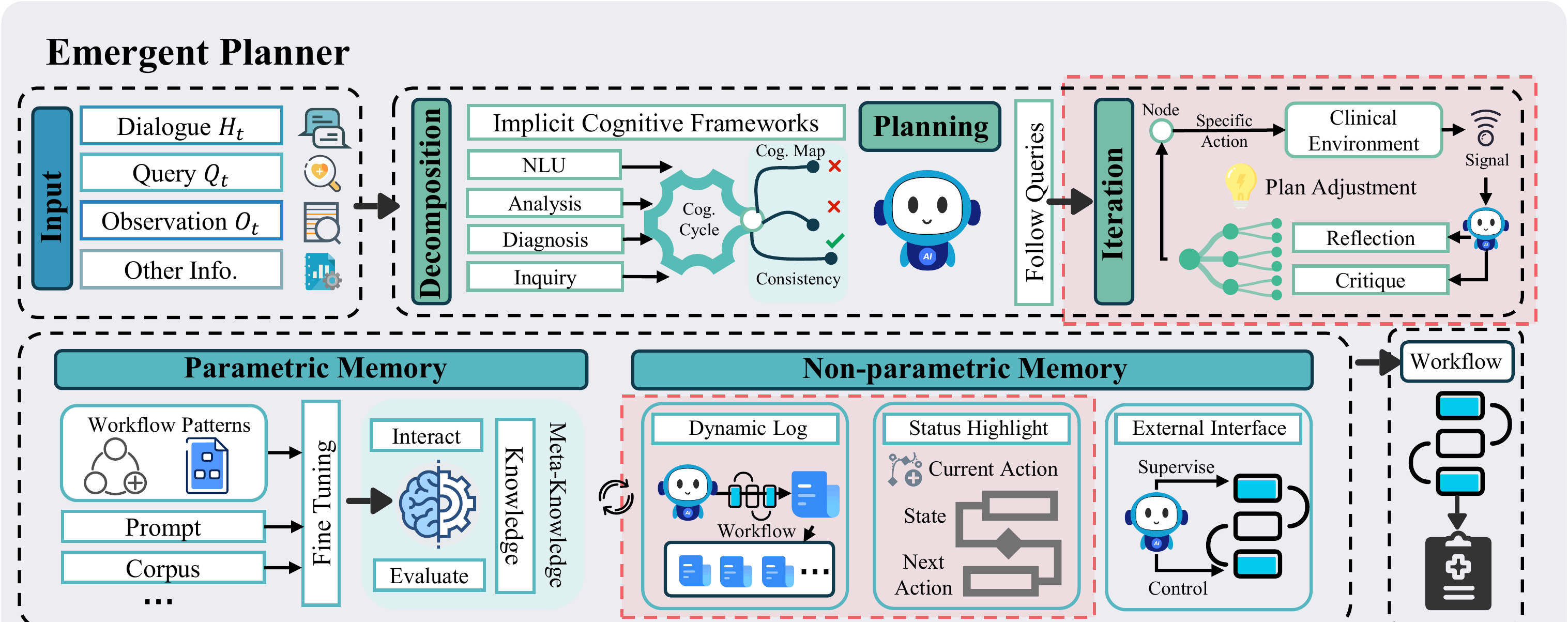
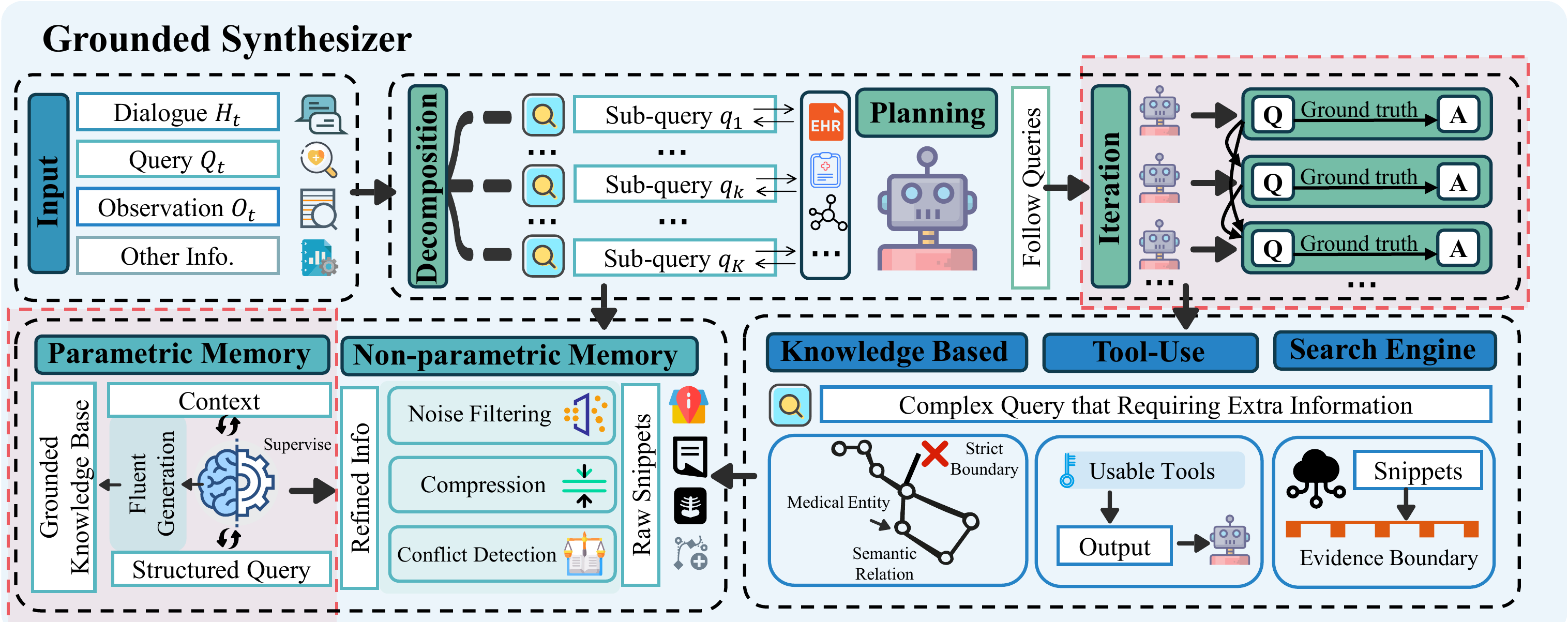
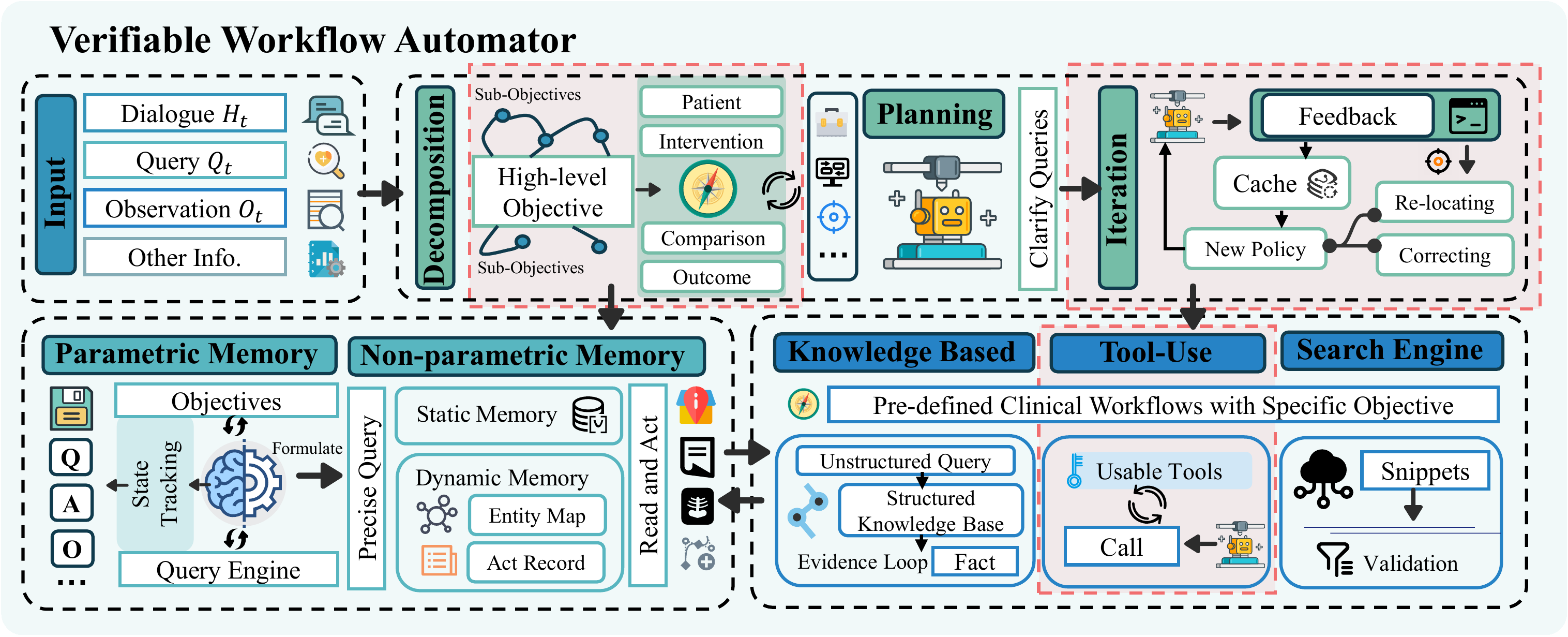
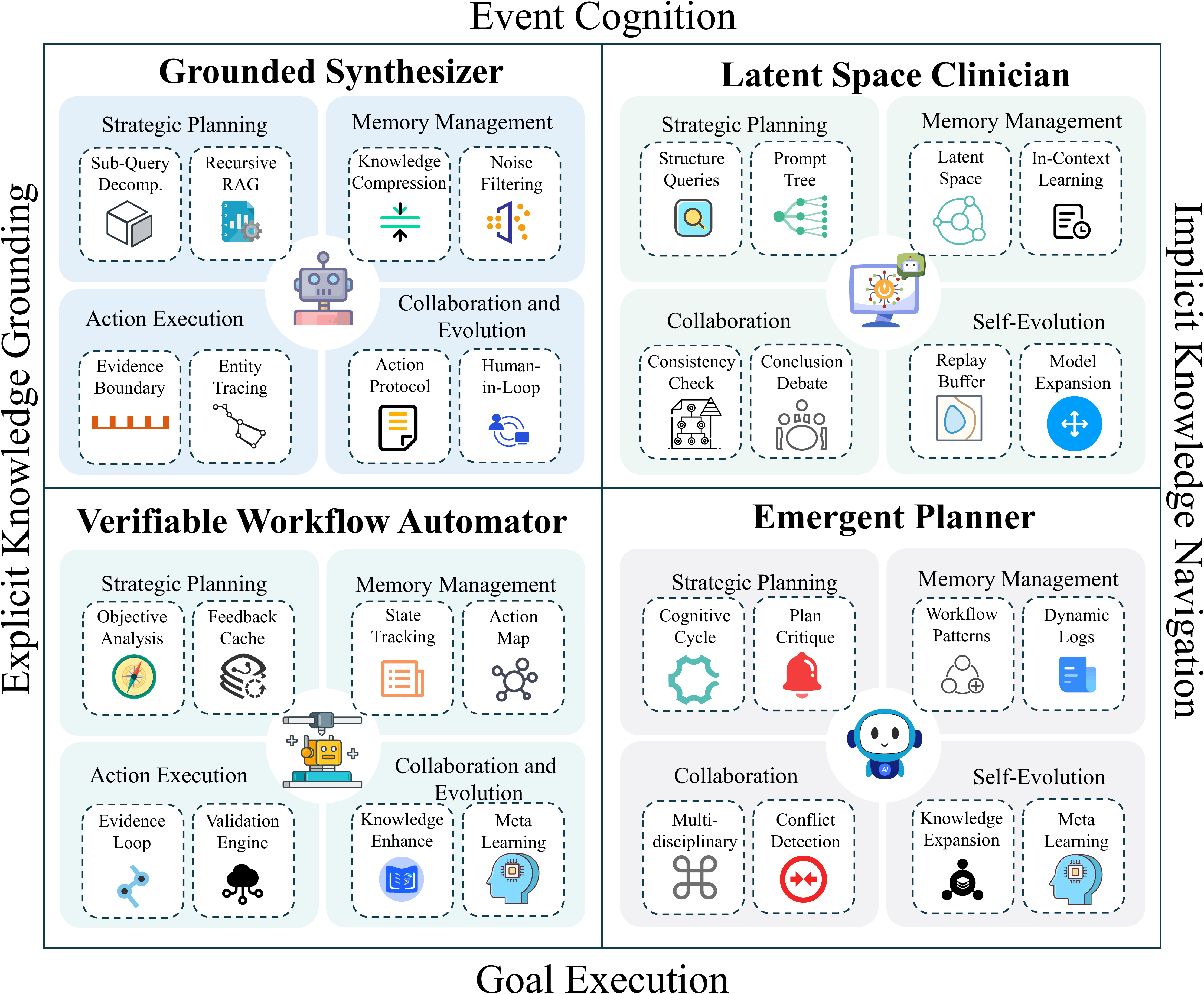
Clinical dialogue demands both empathetic fluency and the rigorous precision of evidence-based medicine. While LLMs possess unprecedented linguistic capabilities, their reactive, stateless architecture favors probabilistic plausibility over factual veracity. This limitation has catalyzed a paradigm shift from generative text prediction to agentic autonomy, where the model acts as a reasoning engine with deliberate planning and persistent memory. We introduce a novel taxonomy along the orthogonal axes of knowledge source and agency objective, categorizing methods into four archetypes that reveal how architectural choices balance autonomy and safety across the entire cognitive pipeline.
Abstract
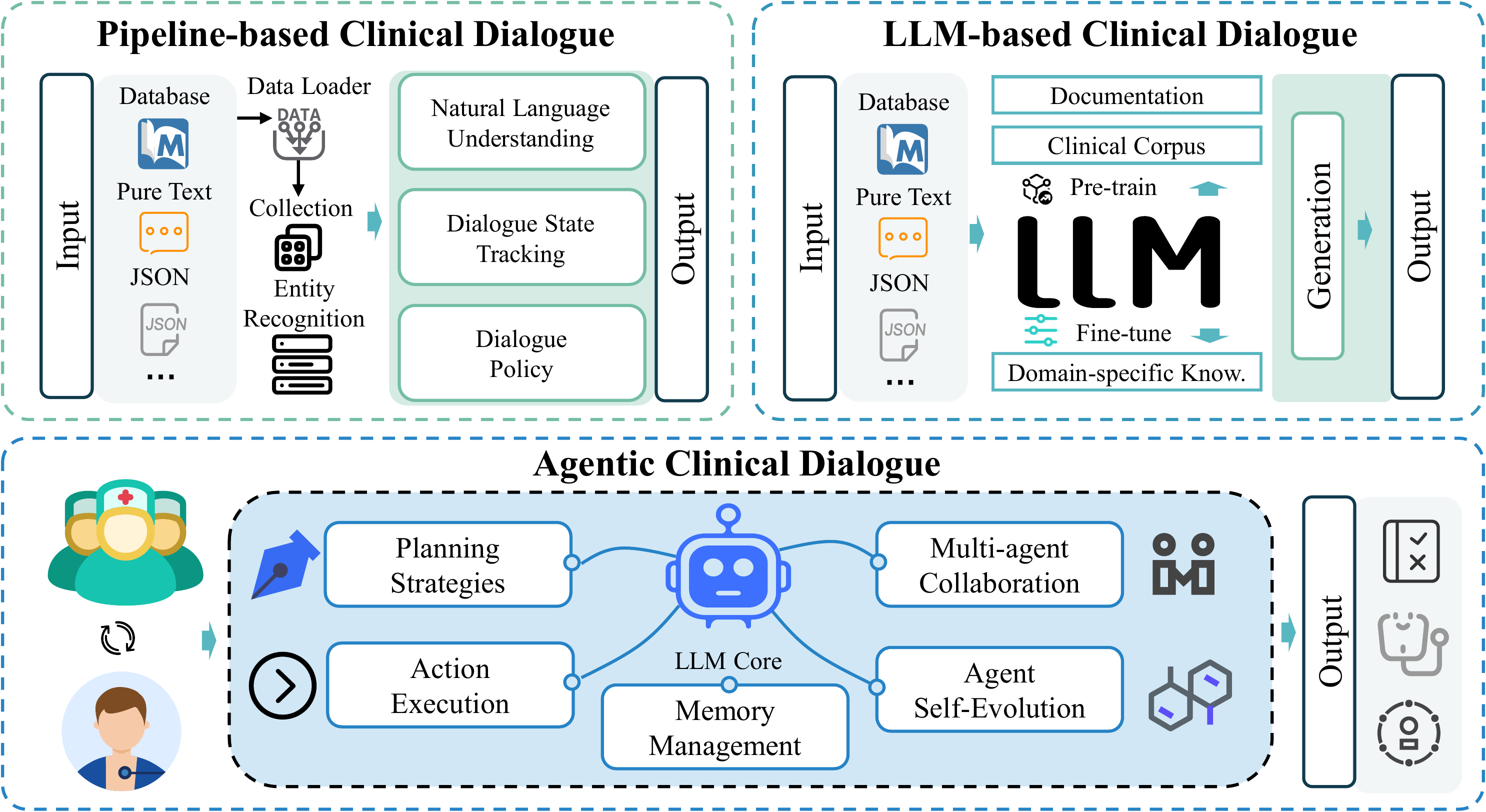
The evolution from pipeline-based to LLM-based to agentic clinical dialogue systems.